
Early years
Growing through rest, closeness, and meals together.
An editorial guide to the practical phases many families move through from birth to around three years: newborn rest, awake observation, and table-height participation.
Birth to 3 years · Routines · Movement · Participation
The first years are not one routine. They are a sequence of changing needs.

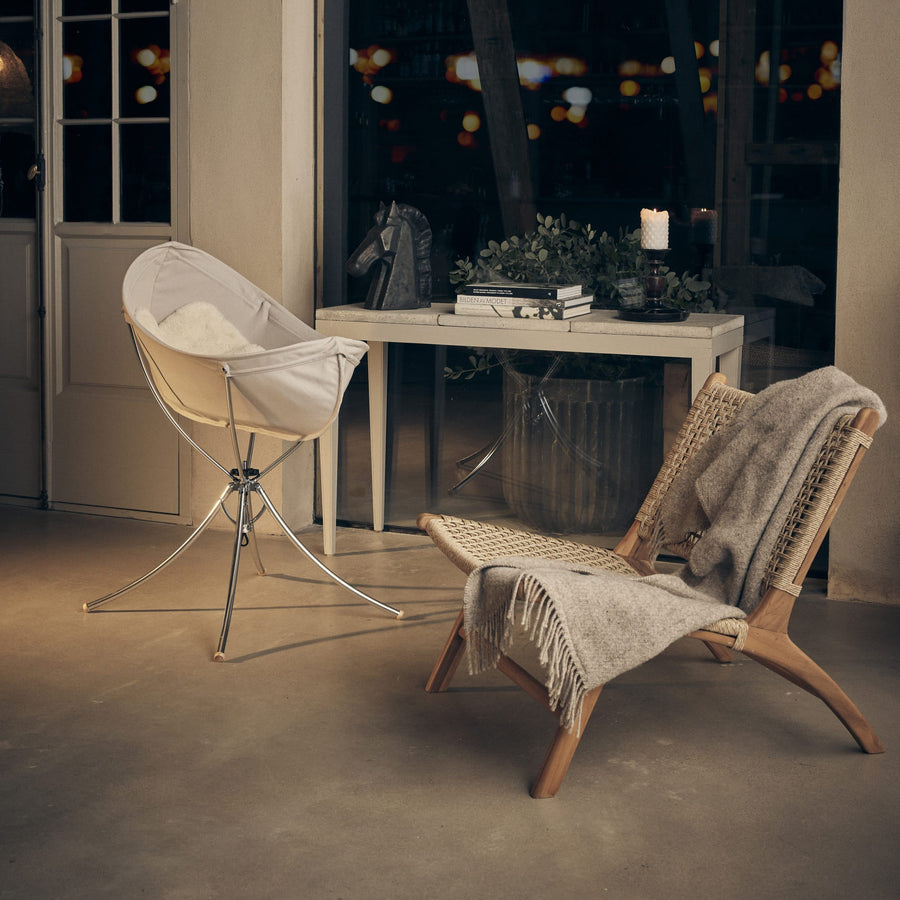
Section 1 - Newborn rest
Sleep, closeness, and the first routines.
The newborn stage is often less about a nursery and more about proximity. Rest happens while a parent eats, folds laundry, answers messages, or moves quietly between rooms.
Sleep recommendations vary across countries and cultures. Some guidance emphasizes a firm, flat sleep surface; other traditions have used more cradled resting environments for supervised daytime moments. What remains consistent is the need for attentiveness, visibility, and a clear place for the baby during the routines of the day.
In the first months, closeness is practical as much as emotional. A parent may want the baby nearby for short naps, quiet awake periods, feeding rhythms, and the many small transitions between bedroom, sofa, kitchen, and table.
The Vaggaro bassinet system responds to that real pattern of family life. The textile bassinet creates a soft, dedicated place for the first months, while the optional mattress offers a firmer, flatter surface for families who prefer that approach. The point is not to prescribe one routine, but to support the routines parents already live with.
Reference note
For formal sleep guidance, parents should follow local advice and product instructions. The American Academy of Pediatrics discusses firm, flat sleep surfaces in its safe sleep guidance, while public-health recommendations vary by country and care setting.

Section 2 - Awake exploration
The stage of watching, listening, and joining the room.
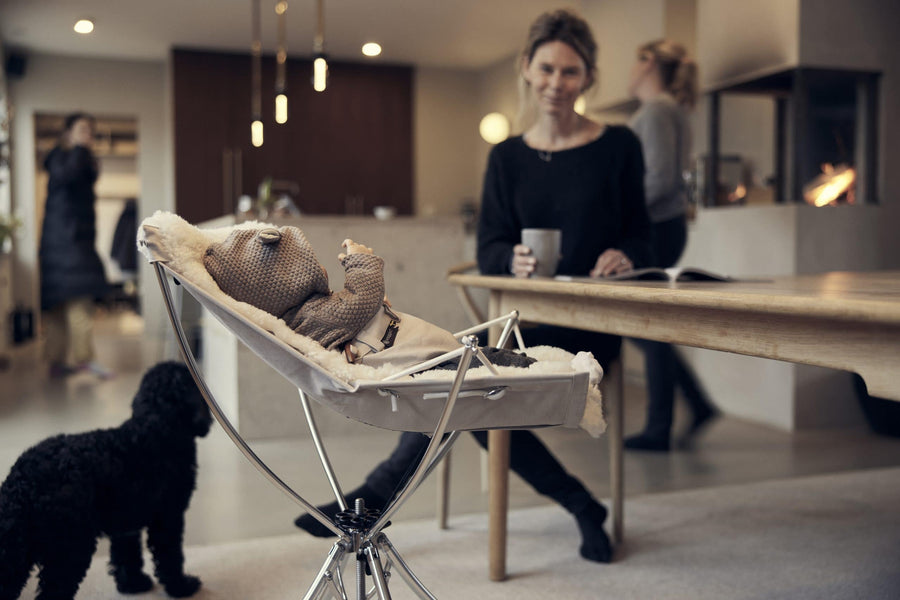
As babies spend more time awake, they begin to learn from ordinary family life: faces, voices, movement, light, kitchen sounds, table routines, and the presence of familiar people.
Awake exploration does not require a busy environment. Often it is the opposite: a calm, visible position where the baby can observe without being placed far away from the family rhythm. This can be useful around kitchens and tables, during bottle feeding, or during early tastes when a baby is beginning to show interest in food.
Families also need practical movement. A place that can move between rooms helps avoid long stretches on cold floors and keeps the baby close to where the parent is actually living the day.
The Vaggaro bouncer supports this middle stage by giving the baby a visible, connected place during awake moments. It is less about entertainment and more about participation: being near faces, voices, routines, and the changing life of the room.
Reference note
Developmental guidance such as the CDC's early milestone materials notes early social awareness through looking at faces and responding to voices. These references are broad orientation, not a schedule every child must follow.


Section 3 - Meals together
Meals are social before they are tidy.
The move into meals is also a move into participation. The child is not only being fed; they are watching gestures, rhythm, conversation, repetition, and the social shape of the table.
Families usually look for signs of physical readiness before using a high chair: stronger head and trunk control, interest in food, and the ability to sit with appropriate support. Formal guidance commonly places complementary foods around six months, but everyday readiness is always interpreted with local health advice and the individual child in mind.
A calm seat at table height can make meals feel less separate. It supports eye contact, comfort during longer family meals, and practical use at home, at restaurants, or while visiting others.
The Vaggaro high chair is the table-stage expression of the same system: familiar foundation, new role. It supports inclusion, comfort, and closeness when meals become part of the child's social world.
Reference note
The World Health Organization describes complementary feeding as generally beginning around six months, alongside continued milk feeding. Parents should follow local health guidance and the child's readiness.